


No Brand - Size W29 L30 - Fair Condition
Vintage 1930s–1940s French Workwear Trousers – Cinch Back Buckle – Button Fly – Black Moleskin
Vintage 1930s–1940s French Workwear Trousers – Cinch Back Buckle – Button Fly – Black Moleskin
Couldn't load pickup availability
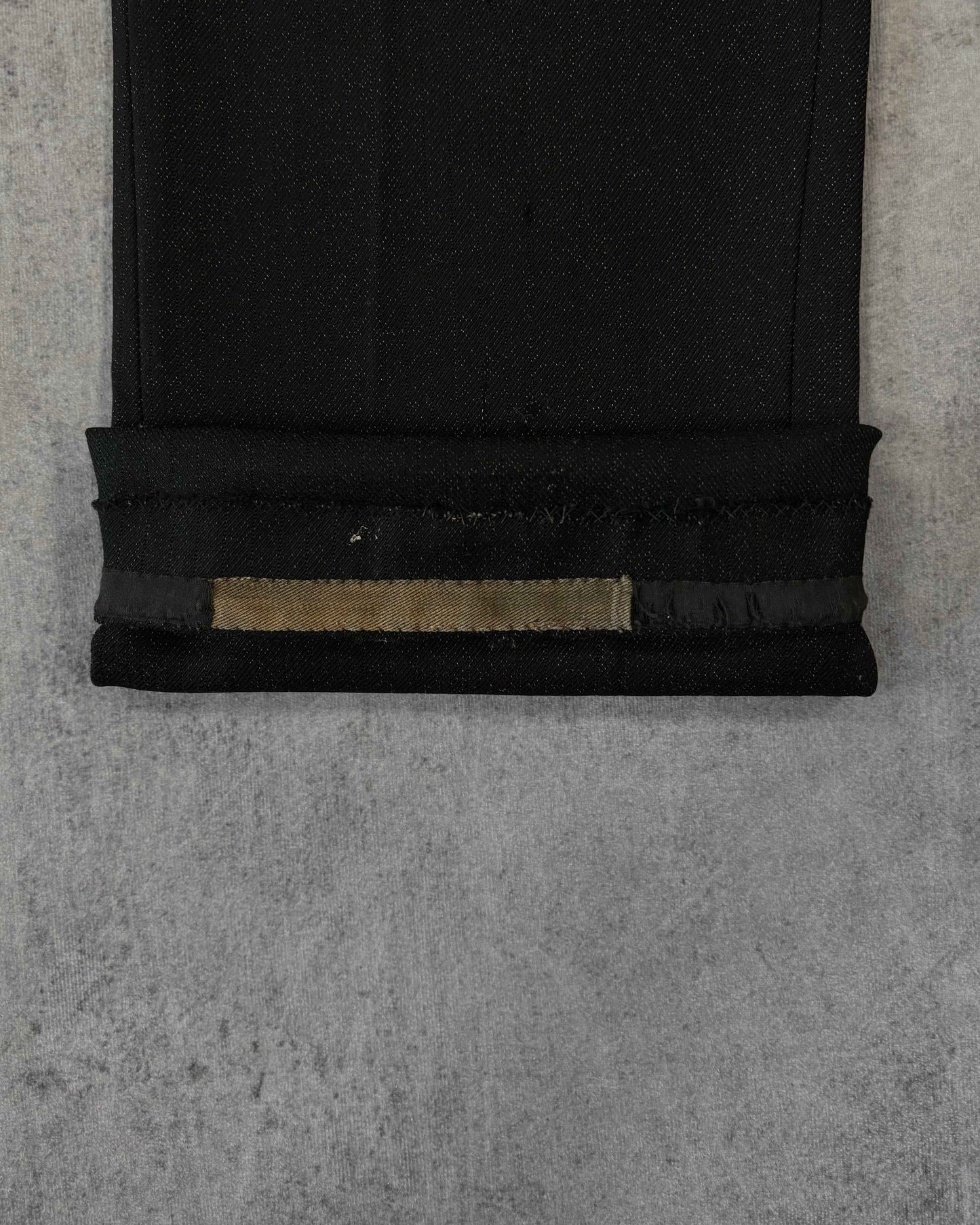
European workwear trousers from the early twentieth century, probably French, dating roughly from the late ’30s to the early ’40s. Classic pre-war details: metal cinch-back buckle, button closure, internal suspender buttons at the waist and a neatly finished striped cotton lining.
The fabric looks like a dense wool or wool-blend work twill (possibly an early moleskin-type weave), with the slightly textured surface typical of interwar utility clothing.
The lining and metal hardware show aging and oxidation consistent with the garment’s age.
Size - fits like W29 L30
Waist 14.2 in · Length 39.4 in
Size - fits like W29 L30 Waist 14.2 in · Length 39.4 in
Suggested size: W29 L30
Label size: Not determinable
Measurements
- Length
- 39.4 in · 100 cm
- Waist
- 14.2 in · 36 cm
- Thigh
- 12.2 in · 31 cm
- Leg opening
- 9.4 in · 24 cm
Size Guide
- Suggested size → the size we recommend based on the actual measurements.
- Label size → the size printed on the label (if there is one).
On vintage pieces the label may not reflect today's fit: go by the measurements, taken flat from seam to seam. For more info, see the dedicated page.
Condition - Fair Condition
Condition - Fair Condition
The condition of our garments is classified according to the following scale:
- Deadstock: Like-new condition, no defects. Fabrics and trim are practically new.
- Excellent: In excellent condition, with any minor imperfections shown in the photos.
- Good: In good overall condition, with signs of wear or obvious defects shown in the photos.
- Fair: with obvious wear and visible defects shown in the photos.
Since they are vintage items, they may still have small imperfections or signs of wear that are not always shown.
All items are washed, sanitized, and stain treated before being put on sale. For more information, please visit the dedicated page.
Shipping and Returns
Shipping and Returns
Orders are processed within 1-3 business days and entrusted to the most suitable courier based on the destination and type of package.
Shipping is free for orders over €100 in Italy and EU countries (zones 1-2) , while in other cases the costs are calculated automatically at checkout.
The right of withdrawal can be exercised within 14 days of delivery . Items must be returned in the same condition in which they were received and as described in the listing.
- Returns must be requested in advance via email or the contact details indicated on the dedicated page;
- The refund is issued within 14 days of receipt and verification of the package , and is made net of shipping costs ;
- Unauthorized returns will not be refunded.
For further details and complete information, please refer to the pages dedicated to Shipping and Returns and Refunds .



Story Time
The Origins of Work Trousers

