


No Brand - Size M - Excellent Condition
Vintage 1970s Green Plaid Flannel Shirt – Workwear Button Down Lumberjack
Vintage 1970s Green Plaid Flannel Shirt – Workwear Button Down Lumberjack
Couldn't load pickup availability
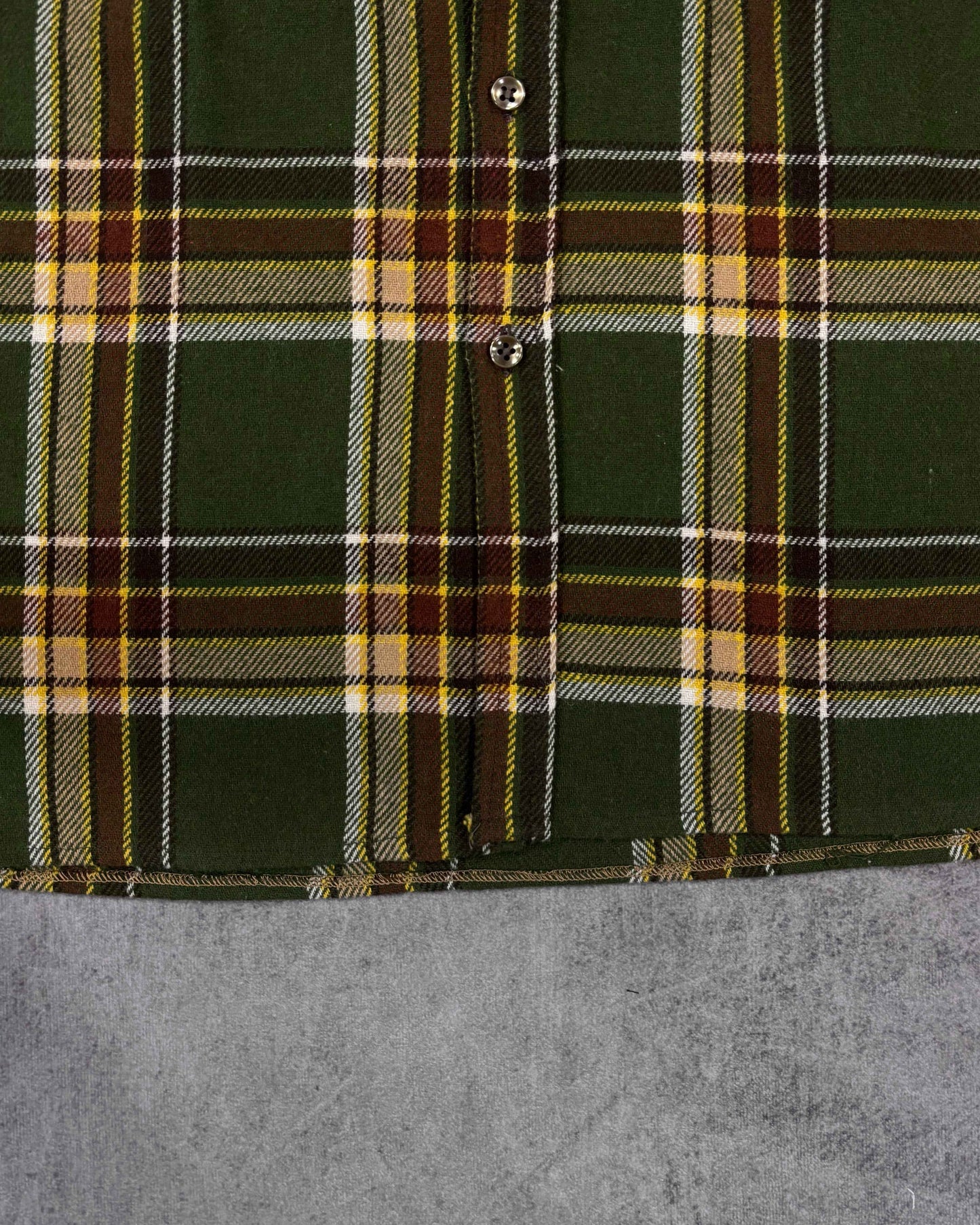
Vintage 1970s tartan flannel shirt with a deep forest green base and a tartan pattern in mustard yellow, brown and white.
The checked pattern is yarn-dyed (not printed): the design is woven directly into the fabric during weaving, and not applied to the surface via printing.
Cut
Cut
Size Guide
- Suggested size → recommended size based on actual measurements.
- Size label → size shown on the label (if present).
On vintage garments, the label may not reflect the current fit: washing, alterations, and past fashions may have changed the original dimensions.
Always rely on the measurements provided. For more information, see the dedicated page.
Conditions
Conditions
The condition of our garments is classified according to the following scale:
- Deadstock : Like-new condition, no defects. Fabrics and trim are practically new.
- Very Good : In excellent condition, with any minor imperfections shown in the photos.
- Good : In good overall condition, with signs of wear or obvious defects shown in the photos.
- Fair : with obvious wear and visible defects shown in the photos.
Since they are vintage items, they may still have small imperfections or signs of wear that are not always shown.
All items are washed, sanitized, and stain treated before being put on sale. For more information, please visit the dedicated page .
Shipping and Returns
Shipping and Returns
Orders are processed within 1-3 business days and entrusted to the most suitable courier based on the destination and type of package.
Shipping is free for orders over €100 in Italy and EU countries (zones 1-2) , while in other cases the costs are calculated automatically at checkout.
The right of withdrawal can be exercised within 14 days of delivery . Items must be returned in the same condition in which they were received and as described in the listing.
- Returns must be requested in advance via email or the contact details indicated on the dedicated page;
- The refund is issued within 14 days of receipt and verification of the package , and is made net of shipping costs ;
- Unauthorized returns will not be refunded.
For further details and complete information, please refer to the pages dedicated to Shipping and Returns and Refunds .



Story Time
The History Behind Flannel

